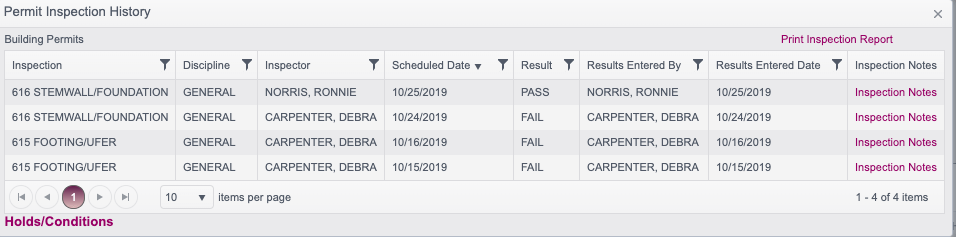
The stem walls, which are the short walls that lift the framing of the house above the grade of the land were approved by the inspector. Actually, we failed at first and had to add some vertical rebar to a wall because it was supposedly a “fire wall.” I’m not sure if that is actually the case or not, but the inspector who failed us just told my concrete contractor that he had to add drill some rebar into the footings, which he then did. After that was done, we had a second inspection and were approved to pour the stem walls, which we just did.
I learned that the City of Phoenix’s Planning and Development Department has an online site where you can check your permit status. The link is here.
Seeing the stem walls in place is a nice hallmark. It gives me a sense that the project is really moving. Next comes putting in the sewer lines that go from all the fixtures in the house to the main sewer line. Of course, there’s an inspection to do right after those are placed. Note that it’s more than just the sewer lines: You have to think about anything that might go underground beneath the slab of concrete that is going to become the floor of the structures. For instance, there’s a kitchen island on the plans and if I want to have electricity there, I have to make sure my plumber puts in a “sleeve” so that we can get an electrical wire to the island. If I want the island to be where a sink goes, then we have to put in drainage and water lines, too. Given that, I’m thinking the island will probably just have an electrical line to it and call it a day.
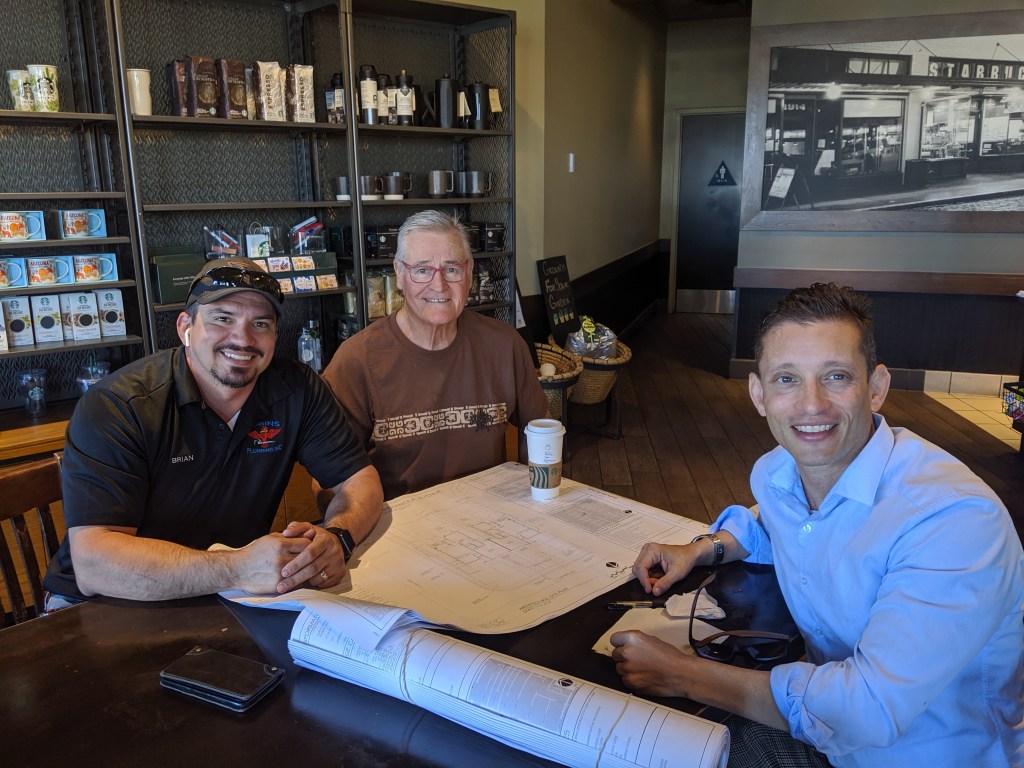
I also met with my plumber to discuss the rough plumbing. At one point, we ended up discussing tankless hot water heaters. Because I only have electrical power and not gas, if I wanted a tankless system, it has to be all electric. The problem is that they can draw up to 120 amps and the each structure is limited to 200 amps. If you imagine a person is using the air conditioner, the dryer, and a tankless hot water heater–let alone recharging their electric vehicle–it just won’t work. Instead, we’ll go for a conventional hot water system with a heat pump on it, a sort of very efficient conventional hot water heater with a recirculating line and that will be a good compromise between efficiency and, well, having enough electricity to supply the rest of the house during peak loads.

 Modern duplex construction in Phoenix.