It turns out the land did not have any connection to the sewer line in the alley. A sewer “tap” needed to be made. To do this, I went to the City of Phoenix Water Services Department, which is desk #8 on the second floor of the city’s main building, and they helped to coordinate the sewer tap. You have to get a commerically licensed plumber to give you a bid and you hand that invoice to the city, which then requires you pay them that amount of money as a bond that they hold until the work has been completed and inspected.
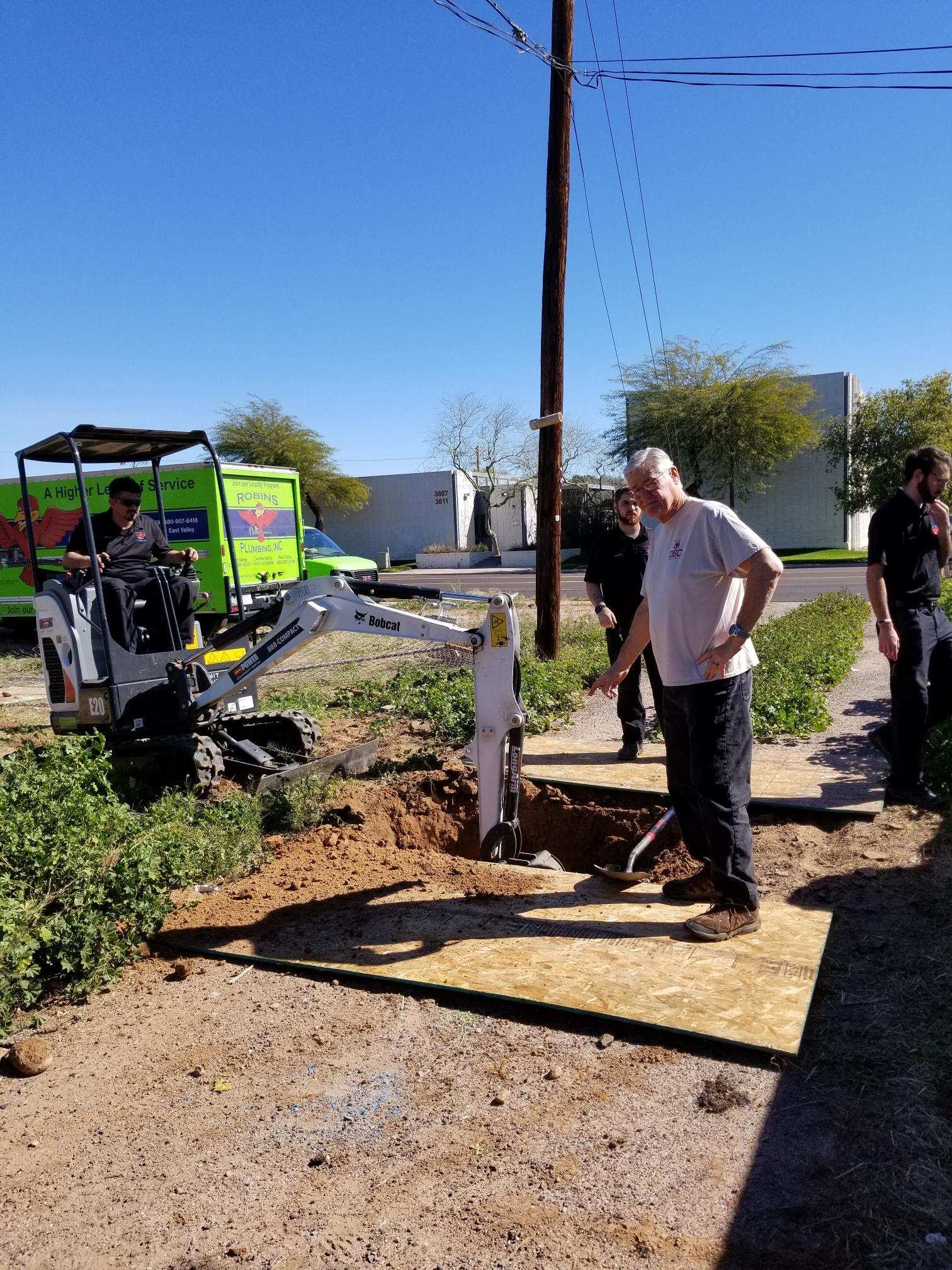
The process has a few steps:
- You have a plumber come and dig out and expose the sewer line and cover that with heavy steel plates.
- The city comes and puts a “tap” into the sewer line, which your plumber then connects to additional pipe that goes into your property.
- The city inspector checks the tap and you rebury the line.
- You have an asphalt company come and do a “slurry and seal” to repave the area where the sewer tap was done.
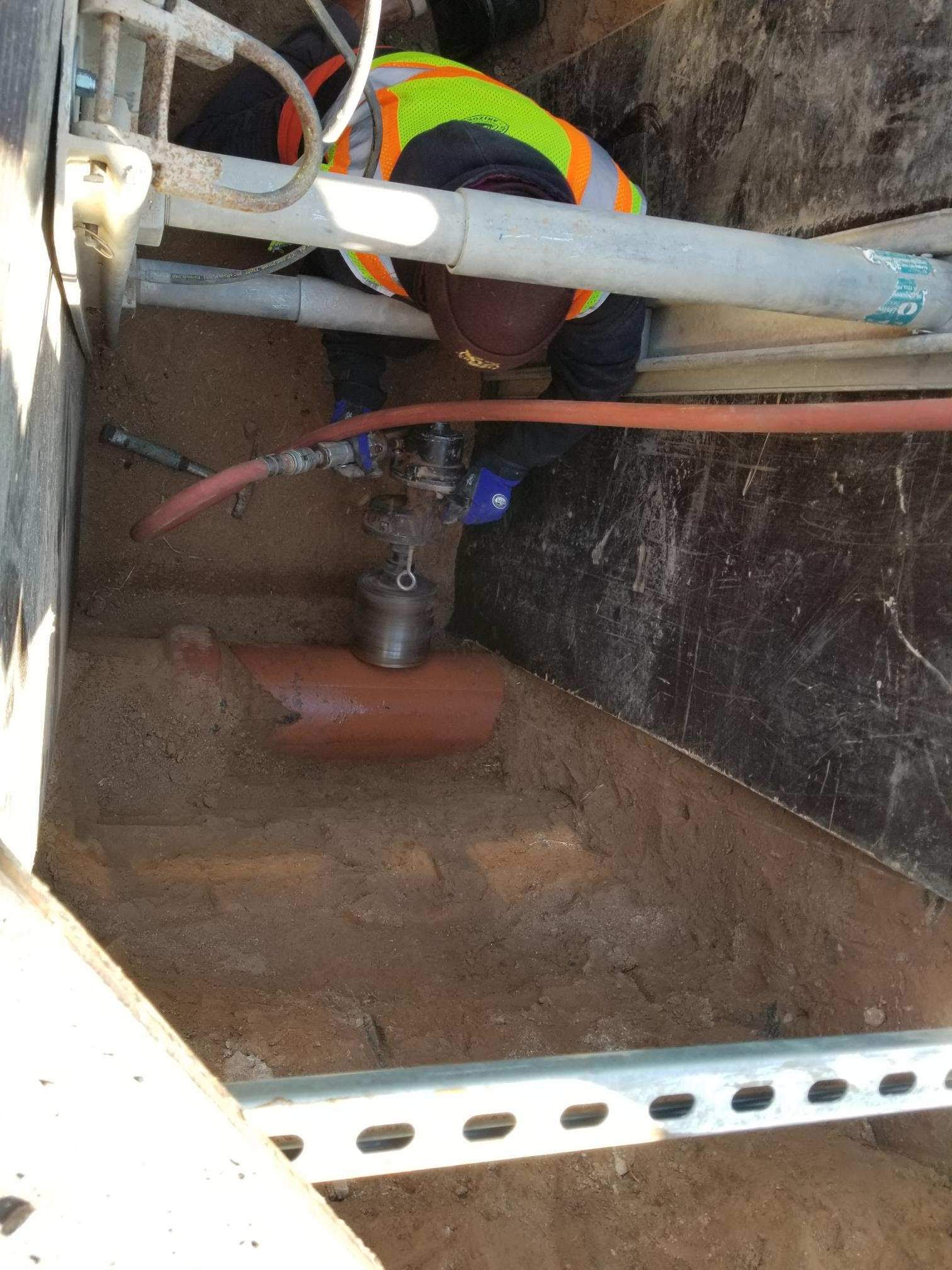
The first step is to ensure that the hole is properly supported so that it doesn’t collapse.

The main sewer line is tapped with a special tool.
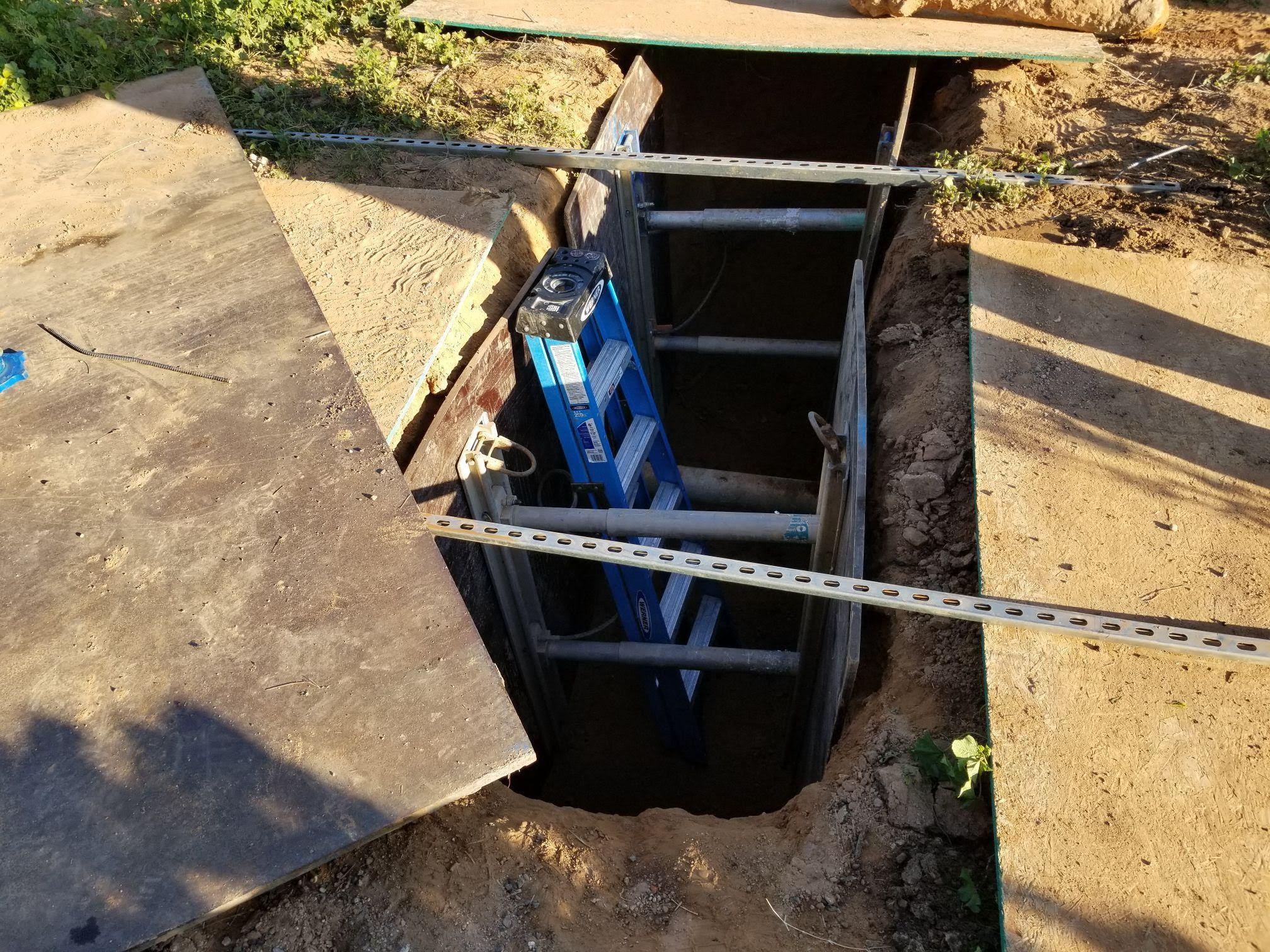
The hole is then covered by very heavy steel plates so that garbage trucks and other traffic can safely go over the hole until the city inspector can inspect the tap.
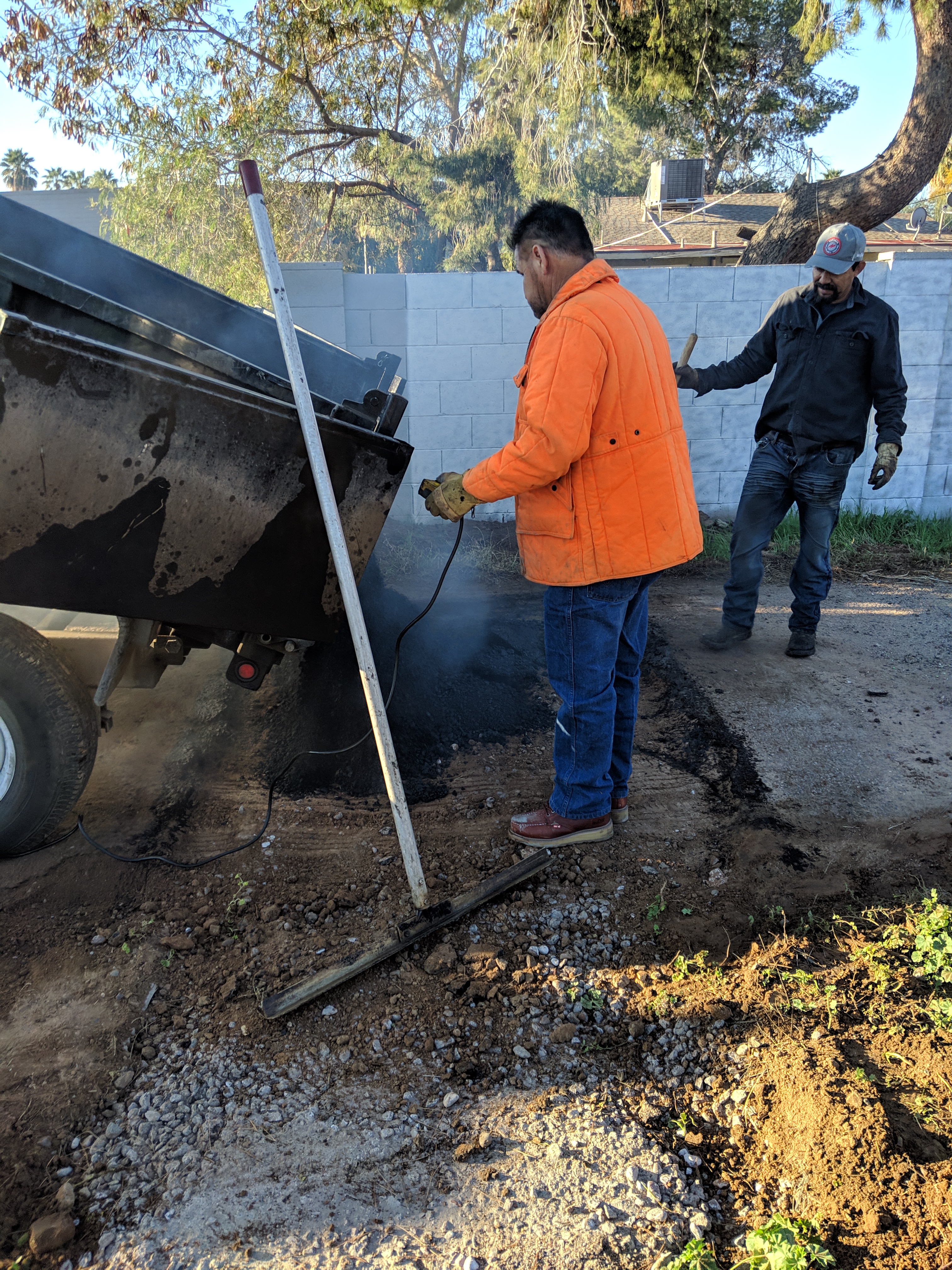
After the inspection, the hole gets refilled and you have to have an asphalt company repatch that entire area plus another 10 feet on either side of the dig.
One of the interesting “factoids” I learned is that the line leading from your structure to the actual sewer line has a very mild slope of 1/2 inch for every foot of travel. This means that your line will fall 1 foot for every 24 feet of travel. While you might think that a steeper slope would be better, in fact, that can create a situation where the liquids outrun the solid waste. So you actually need to have a sort of gentle slope away from your house until you get pretty close to the main sewer line. At that point, the pipe can slope abruptly directly into the sewer.
Overall, it very expensive to get a sewer tap done and adds at least $6,000 to any project if not more.


 Modern duplex construction in Phoenix.